
Peru: When Words and Deeds Come Together
Holistic Church Planting provides Living Water
Where water does not flow, life is limited—and often even impossible. In many regions of the world, people must get by without clean drinking water, resulting in disease, crop failures, and daily hardship. But there are ways to improve these circumstances—through the help of churches, including new ones that emerge through missionary work. They proclaim the Gospel not only with words but also by visibly living it out in their actions. For example, this is the case in the mission among the Quechua in Peru.
Life in the Highlands
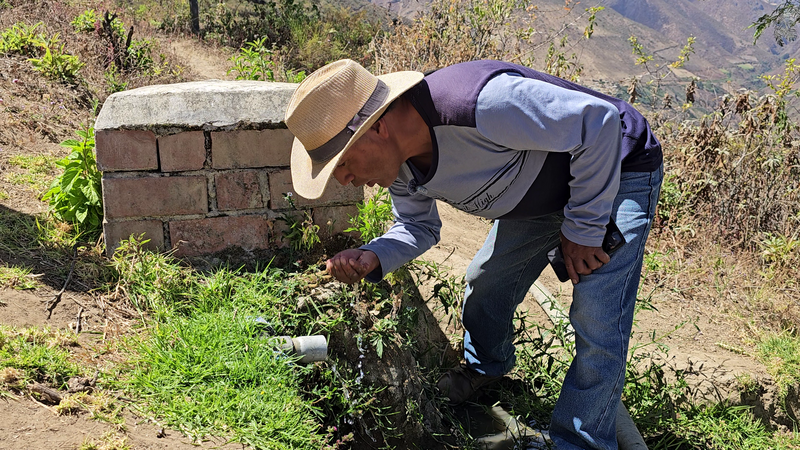
In the highlands of Apurímac and Cusco, at over 3,000 meters above sea level, the Quechua people grow potatoes, quinoa, and corn—often on narrow fields on the mountainsides. Some families raise sheep or llamas. The dry season lasts from April to October: It doesn’t rain for weeks on end, the soil becomes hard and cracked, and the young crops are in danger of drying up. Without irrigation, the harvest remains meager—and hunger becomes a real threat for the coming months. For the people here, fetching water usually means walks to distant springs. Because there are hardly any trees left in the region, the soil cannot store rainwater. Climate change is further exacerbating the situation: periods of drought are increasing, while sudden heavy rains threaten the harvest just as much as the drought itself.
The Response of the Church
The young churches in the Quechua villages see and understand this need. And they take action: on one hand, out of their social responsibility, for Christ calls us to love in deed and in truth. On the other hand, the Gospel itself speaks of “living water” that quenches the soul’s thirst. Thus, projects were launched: pipes were laid, tanks were built, and wells were drilled. This practical help became a testimony of faith. It is precisely through such initiatives that EBMI’s vision is being realized: “Sharing God’s transforming love that people may live in hope.” In so many places across the 16 countries where EBMI supports missionary projects, this is a central factor.
Water Tanks for Apurímac and Cusco
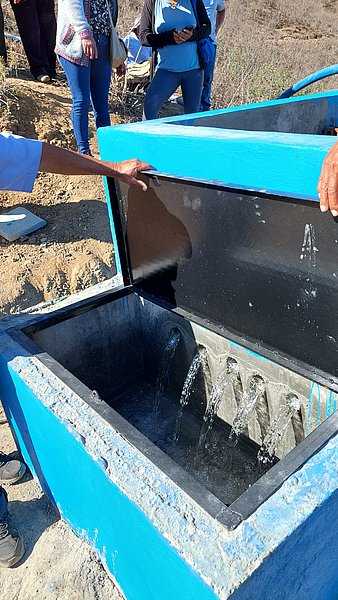
In Apurímac and Cusco, it was Adrián Campero—who has been our missionary to the Quechua people in Peru for 42 years—who first brought this need to the attention of EBMI years ago. Thanks to his advocacy, churches worked together with the local population to build large water tanks with support from EBM INTERNATIONAL. During dry seasons, the fields could be irrigated, yields increased, the food situation improved, and social stability grew as a result. The people also learned to farm their land sustainably. Through the provision of water, the spiritual message of living water became truly tangible.

Water Pipelines for the Jimbe Region
In northern Peru, in the villages of Canchas and Miraflores, pipelines six and ten kilometers long were laid—fed by high-altitude springs in the mountains. For many years, people across the country had appealed to the authorities for help, but always in vain. When despair was at its peak, missionaries Hugo and Carlota Mondoñedo brought new hope. Hugo promised to approach EBMI to see if there was a way to help. The approval came quickly—because it was clear that these people could no longer carry on living in this way.
After many years, the local people finally received clean drinking water. The work was dangerous and arduous, but the villagers themselves laid the pipes across steep slopes and through rugged terrain: 59 villagers, along with their families, worked tirelessly for nine days. The resources for this came from EBMI donations. With the installation of the pipes, clean water reached the villages, and illnesses caused by contaminated water declined. The joy and gratitude of the villagers were immeasurable.
Parallel to this construction work, home groups and worship services began to form. New churches grew out of this practical assistance—church planting and social ministry went hand in hand.
Sustainable change
Today, years after the initiative was implemented, the churches have grown. Small groups have become stable communities that not only hold worship services but also exert a social influence. They are seen as beacons of hope because they demonstrate that the Gospel is not just words, but also deeds. People understand that faith in Christ is a source that never runs dry—like a pipe that continuously supplies water.
But whoever drinks of the water that I will give him shall never thirst.
“Living Water”
Jesus says: “But whoever drinks the water I give them will never thirst.” (John 4:14). Just as water pipes transformed people’s lives, so the Gospel transforms hearts and communities. Church planting and social ministry are two sides of the same coin: the living water of faith and the water essential for daily life flow together and make visible what Christ promises.
According to a report by Carlos Waldow—Regional Representative for Latin America
This article was first published in the EBMI Magazine 2/2026
Thanksgiving Campaign: Living Water and the Bread of Life
Where clean drinking water and a reliable supply of food are lacking, people like Hugo Mondoñedo are needed: they offer hope, preach the gospel and provide practical help. The missionary work of EBM International is always holistic; for instance, it supports food distribution initiatives in Africa and India, such as milk-and-egg programs and feeding programs for the poor. Agricultural training leads to better harvests, thereby securing the food supply.
To mark the Thanksgiving season, we invite you to support such projects worldwide. Your donation helps to provide the means of livelihood and to invite people to faith in Jesus Christ – the living water and the bread of life.